
Best Place to Sell Jewelry Online: Top 5 Platforms for 2026

This article may contain affiliate links. We may earn a commission at no extra cost to you. How we earn money

In this article
The best place to sell jewelry online depends on what you sell. For your own designs, open your own store, for example on Shopify. For handmade or small-batch pieces, Etsy fits best. For pre-owned or vintage jewelry, use a marketplace built for resale: Worthy for fine pieces, eBay or Ruby Lane for vintage and estate jewelry.
Key Takeaway
Marketplaces take a cut of each sale and give you instant traffic and built-in trust. A hosted store charges a monthly plan and gives you full control and branding. Fees and plans below come from each platform’s official pages, as of October 2026.
Top E-commerce Websites for Jewelry Stores:
- Shopify: Scales easily with powerful apps and integrations
- WooCommerce: Flexible, open-source option for WordPress users
- Wix: Beginner-friendly with stylish templates
- Squarespace: Great for design-focused jewelry brands
- BigCommerce: Strong SEO tools and multi-channel syncing
Top Online Marketplaces for Jewelry:
- Etsy: Best for handmade and unique jewelry
- eBay: Huge buyer pool with auction or fixed-price listings
- Ruby Lane: Curated platform for high-end and estate pieces
- Worthy: Auction-based site tailored for fine jewelry resales
- Amazon Handmade: Access to Amazon’s massive audience with artisan credibility
💡For your own jewelry brand, Shopify combines a hosted store, jewelry themes and an app marketplace in one plan.
Top 5 Best Ecommerce Sites for Jewelry
Each platform below suits a different kind of jewelry seller, so match it to your goals.
1. Shopify: Best for Custom Jewelry Brands

Shopify is a hosted store builder: you pay a monthly plan and it runs your store and checkout. Shopify’s own pricing page says millions of merchants sell on it.
The best thing about Shopify is the ease of use. You can modify the layouts, tweak colors, and adjust product pages without any technical skills required. To further boost sales, many jewelry stores use a Shopify upsell app to encourage customers to purchase related products or upgrades before checkout. Such flexibility also helps enhance customer experience and drive product awareness.
Pros
- Jewelry themes with zoomable, high-res images for custom designs.
- Various customization tools and jewelry apps.
- Easily scales to manage hundreds of jewelry SKUs
- Integration with top jewelry dropshipping suppliers
Cons
- Using an outside payment provider adds a transaction fee: 2% on Basic, 1% on Grow and 0.6% on Advanced (Shopify pricing page).
- Basic SEO/traffic tools.
Pricing: Shopify runs on a monthly subscription. As of October 2026, US plans cost the following per month, with a lower rate when you pay yearly. Our Shopify pricing plans review goes through each tier.
- Basic: $25/month, or $19/month billed yearly
- Grow: $65/month, or $49/month billed yearly
- Advanced: $399/month, or $299/month billed yearly
- Plus: from $2,300/month
Start your online business.
Build and grow fast.
2. WooCommerce: Best for WordPress Users
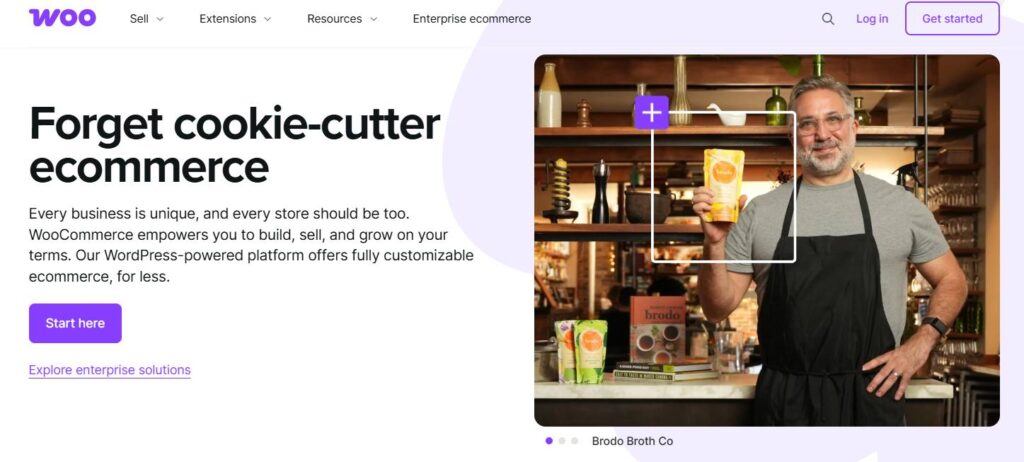
WooCommerce is a free, open-source plugin. It is integrated on WordPress, a powerful CMS (content management system) platform. WooCommerce is also about flexibility. Another highlight feature is the built-in SEO-optimized blog. It also has a vast plugin library, allowing for complex jewelry store setups.
Pros
- Customizable product pages to highlight jewelry specifics.
- Strong SEO capabilities and plugins like Yoast SEO.
- Various jewelry-specific plugins.
Cons
- Setup takes effort. Besides installing, you will need to secure a domain and hosting.
- Traffic is your job since WooCommerce doesn’t provide a built-in audience.
Pricing: The WooCommerce plugin is free to download. A working store still needs a domain, hosting and often paid extensions, and those costs depend on the providers you choose.
3. Squarespace: Best for Visually Stunning Stores

This platform is all about building beautiful, design-focused websites that grab attention. Boasting a wide collection of sleek, modern templates, Squarespace excels at highlighting intricate details of jewelry. Its e-commerce functionality is simple yet powerful. Notable features include unlimited products and abandoned checkout recovery.
Pros
- Jewelry-ready designs with large, high-quality images and zoom features to showcase the items.
- Built-in blogging to connect with customers and boost SEO.
- Mobile-optimized templates for shoppers browsing on phones.
Cons
- Limited options for complex jewelry styles like multiple metal types.
Pricing: Squarespace sells three plans: Basic, Core and Advanced. The online store transaction fee is 2% on Basic and 0% on Core and Advanced (Squarespace pricing page). On a $100 necklace that is $2 on Basic and $0 on Core or Advanced. Squarespace shows prices in your local currency, so check the price for your country on its pricing page and weigh each plan price against that fee. Every site starts with a 14-day trial.
4. Wix: Best for Flexible Design
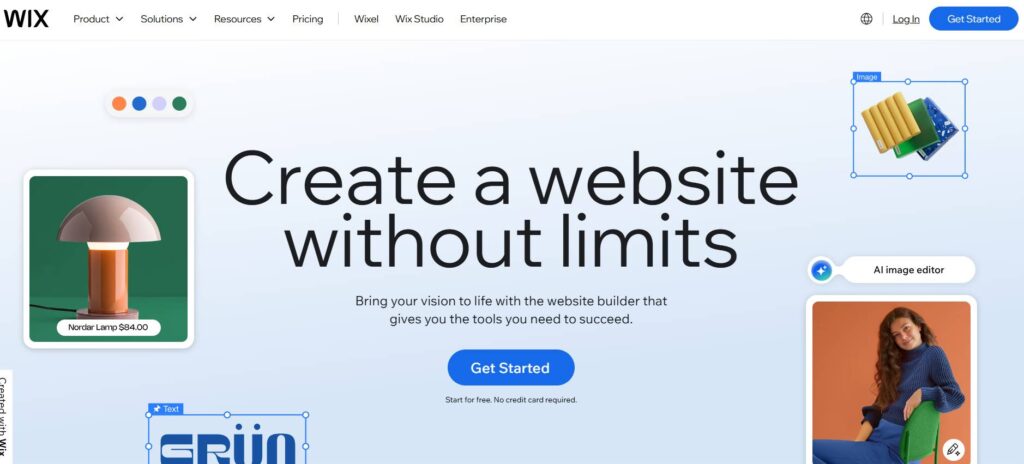
Wix is a website builder aimed at small business owners, artisans and creative entrepreneurs who want a simple store. It blends design with easy setup, and the e-commerce tools stay simple: product listings and secure payments cover the basics.
Pros
- Jewelry-focused templates with zoomable, high-res galleries.
- Custom product pages let you showcase unique jewelry stories.
- Wix App Market offers jewelry-specific tools.
Cons
- Limited scaling for large jewelry catalogs.
- No built-in jewelry customization options.
- Basic analytics lack deep jewelry sales insights.
Pricing: Wix sells several Business plans, and its pricing page shows prices in your local currency. Wix lists a free domain for 1 year with your first premium plan purchase, and conditions apply. Compare the Business plans and the domain renewal price on that page for your country.
Read more: 10 Biggest Jewelry Stores in USA: Diamonds, Gems & Jewelry
5. BigCommerce: Best for Multi-Channel Jewelry Sales

The list continues with BigCommerce. BigCommerce is especially for jewelers who want to sell in more than one place. It syncs your jewelry store with marketplaces and social platforms. Be it Amazon, eBay, or your own site, it keeps your jewelry listings consistent and sales flowing.
Pros
- Multi-channel syncing to marketplaces such as Amazon, Walmart and eBay, plus social channels
- Flexible variant support for metals, sizes, and styles
- Robust built-in SEO features
- Real-time shipping quotes for accurate checkout pricing
Cons
- No jewelry-specific templates.
- Steep learning curve for jewelry variant setup.
Pricing: BigCommerce offers four plans, shown here per month when billed annually (BigCommerce pricing page). Sign-up comes with a 15-day trial.
- Core: $29/month ($39/month billed monthly)
- Growth: $79/month ($105/month billed monthly)
- Scale: $299/month ($399/month billed monthly)
- Performance: from $1,499/month
Top 5 Best Online Marketplaces to Sell Jewelry
If you are looking to sell on online marketplaces, below are our top recommendations.
1. Worthy: Best for Luxury Jewelry Auctions
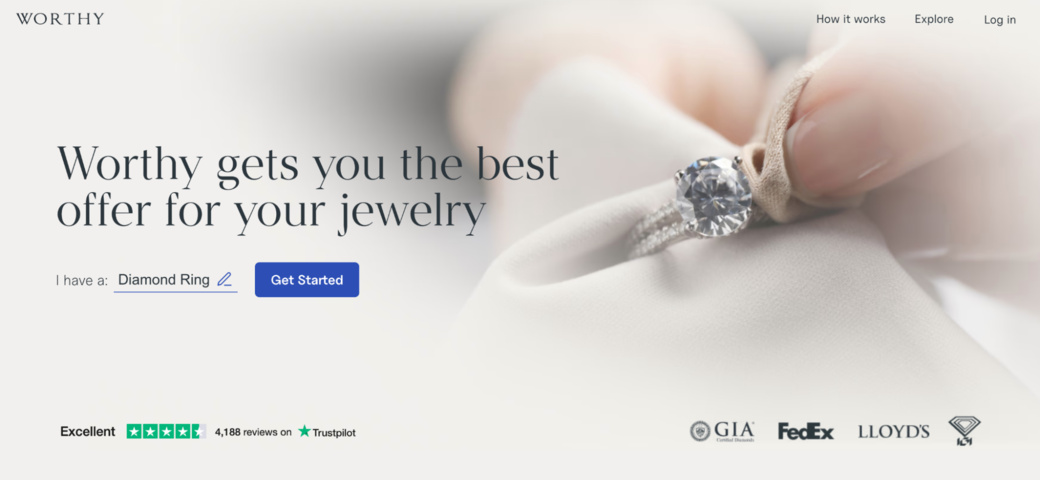
Worthy is an online auction platform for diamond and fine jewelry. It handles the selling steps for you: its seller page lists complimentary diamond grading at labs such as GIA and a prepaid, insured shipping label.
Pros
- Auction format aimed at getting a high price for your jewelry
- Complimentary diamond grading
- Marketplace tailored for jewelry experts and buyers
- Prepaid, insured shipping label for your item
Cons
- Luxury-only focus.
- Auction unpredictability.
- Sales take time: Worthy says items sell within an average of 10-14 business days.
Pricing: Worthy’s seller page publishes no fee rate, so confirm how it charges for your piece before you send it in.
2. Etsy: Best for Handmade and Unique Jewelry
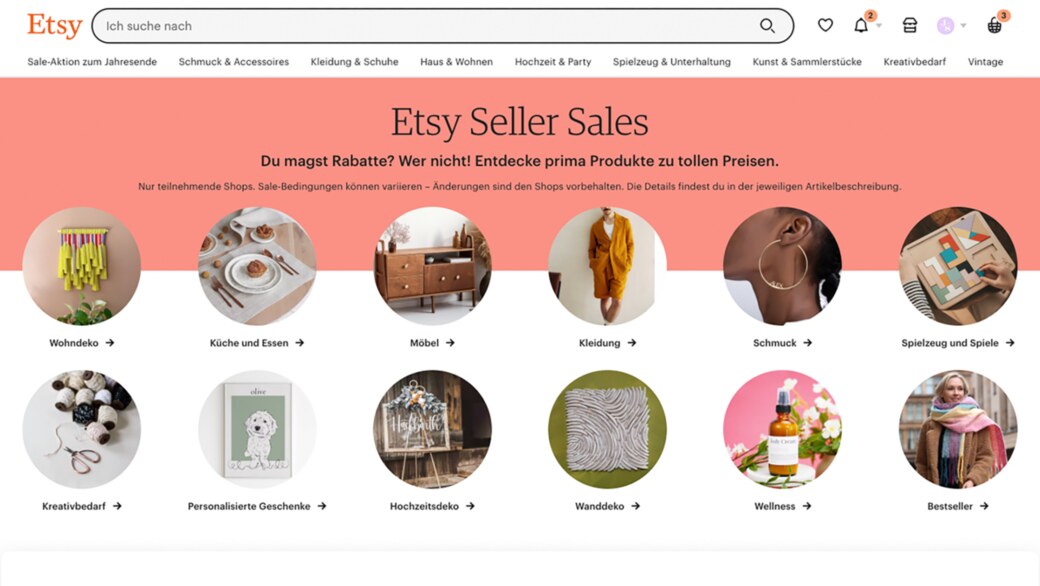
Etsy is the best platform for handmade and one-of-a-kind jewelry. Its buyers come looking for unique, personal items, which suits a small-batch jeweler.
Pros
- Large audience of jewelry enthusiasts
- Strong demand for unique, handmade pieces
- Easy to use and navigate, quick setup
- Built-in trust factors such as buyer reviews and seller ratings.
Cons
- Jewelry market saturation and stiff competition.
- Fee stack-up on jewelry sales.
- Limited jewelry customization options.
Pricing: Etsy charges for listing, selling and payment processing. As of October 2026 (Etsy Help Center fee pages):
- Listing fee: $0.20 per jewelry item. Listings expire after 4 months, and renewing costs $0.20 again.
- Transaction fee: 6.5% of the order total, including shipping and gift wrap you charge for.
- Payment processing: 3% + $0.25 per order for sellers with a US bank account.
- Offsite Ads: 15% of an attributed order for shops under $10,000 in sales over 365 days, and 12% at or above that. The fee is capped at $100 per order and applies only if a sale comes from an Etsy ad.
You may need: Check Out 20+ Best Digital Products to Sell on Etsy
3. eBay: Best for Auctions and Vintage Pieces
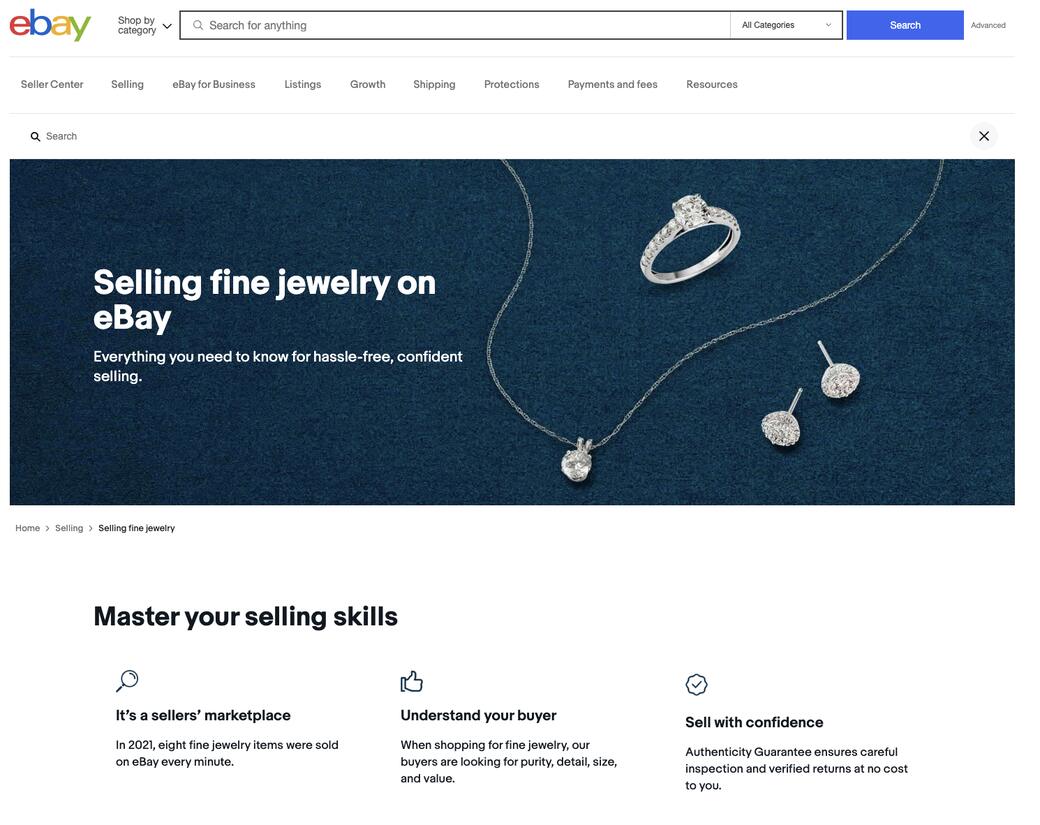
eBay is a powerhouse for jewelers dealing in vintage, pre-owned, or auction-style sales, and it reaches buyers worldwide.
eBay runs an Authenticity Guarantee program for eligible jewelry, which gives buyers confidence in your items.
Pros
- Auction format encourages competitive jewelry bidding
- Access to a massive global buyer pool
- eBay Authenticity Guarantee builds buyer confidence
- Flexible listings for both quick sales and auctions
Cons
- High fees cut jewelry profits.
- Jewelry scams worry buyers.
- Time-intensive, as managing bids and shipping each jewelry item eats hours.
Pricing: eBay gives you up to 250 zero insertion fee listings a month. Other fees, as of October 2026 (eBay seller fees page):
- Insertion fee: $0.35 per listing in most categories after the free 250
- Final value fee in Jewelry & Watches (excluding Watches, Parts & Accessories): 15% of the total sale amount up to $5,000, and 9% above $5,000
- Per order fee: $0.30 for orders ≤ $10, $0.40 for orders > $10
4. Ruby Lane: Best for High-End Antique Jewelry
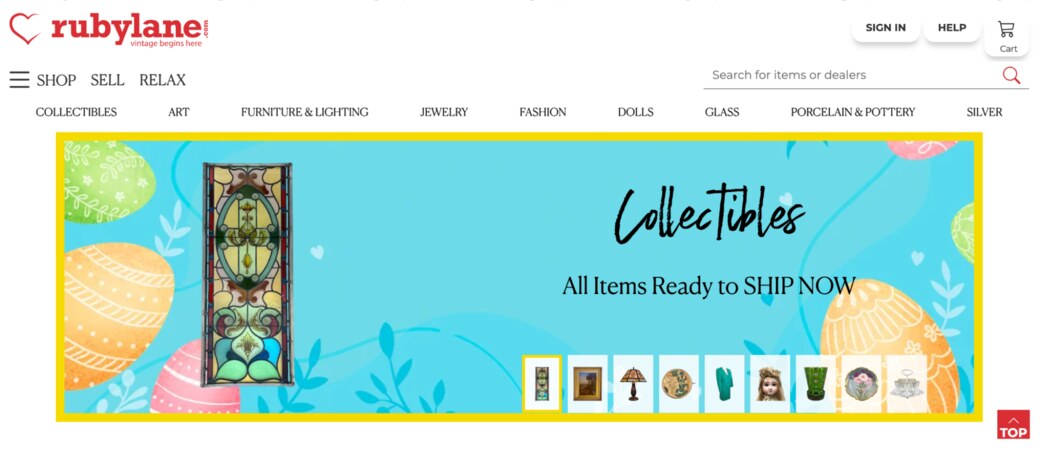
Ruby Lane is a curated marketplace that connects vetted sellers with buyers of antique, vintage and estate jewelry. Compared with Etsy, it leans toward premium pieces.
Pros
- Specializes in high-end jewelry, ideal for higher-value estate pieces
- Curated platform with vetted sellers
- Detailed listing options tailored for fine jewelry
- Straightforward sales without auction hassle
Cons
- Strict jewelry standards.
- Slow sales pace.
Pricing: Ruby Lane’s seller page lists a monthly maintenance fee and service fee percentages. Check the current amounts there before you compare Ruby Lane with Etsy.
5. Amazon Handmade: Best for Reaching Amazon Shoppers
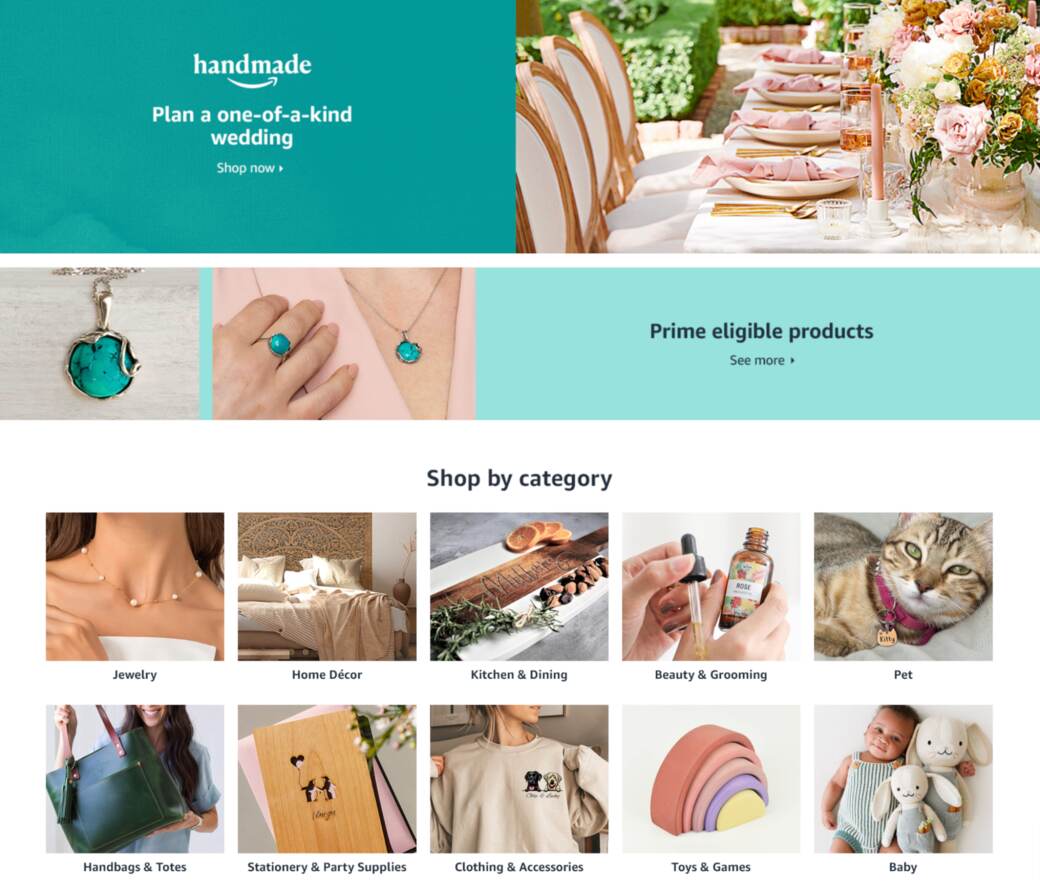
Amazon Handmade is a section of Amazon’s marketplace for handmade goods. It suits sellers of small-batch jewelry, such as custom earrings or beaded necklaces, who want Amazon’s shoppers.
Pros
- Handmade badge and Amazon’s shoppers.
Cons
- Fierce jewelry competition.
- Long approval process.
Pricing: Amazon Handmade charges the following (Amazon Handmade page):
- Referral fee: 15% per sale, or $0.30 per unit shipped if that is greater
- Monthly fee: the Professional plan costs $39.99 a month. Amazon waives it for approved Handmade sellers after a one-time first-month payment.
What to Consider Before Choosing a Jewelry Selling Platform
Before you choose the best place to sell jewelry online, compare the factors below.
1. Fees and commissions
Most online jewelry sellers pay some kind of fee. A hosted store charges a monthly plan: Shopify’s Basic plan costs $25 a month, or $19 a month billed yearly (as of October 2026), plus payment processing and any apps.
Marketplaces charge per sale. Take a hypothetical $100 necklace, before shipping, tax and ads. On Etsy you pay $0.20 to list it, a 6.5% transaction fee ($6.50) and 3% + $0.25 for payment processing ($3.25), which is $9.95 in total. On eBay, in the Jewelry & Watches category, the final value fee is 15% ($15) plus a $0.40 order fee, which is $15.40 in total with the listing inside the 250 free ones. On Squarespace the same $100 sale costs $2 in transaction fees on the Basic plan and $0 on Core or Advanced, before the plan price.
2. Target audience reach
The chosen platform should be the place where your buyers already hang out. Simply put, it should provide audience access or promotional tools to reach jewelry buyers effectively.
3. Ease of use and setup
This is about getting your jewelry online without stress. Choose platforms that allow quick jewelry listings, like under 15 minutes, or simple store setup with no coding needed.
You may be interested in: Creative Jewelry Business Names
Read more: Top 10+ Reliable Jewelry Dropshipping Suppliers to Consider for Business
Key Steps to Sell Jewelry Online Successfully
Opening an online business is more than just picking a platform. Here are some tips to launch and grow a successful jewelry store.
- Define your niche: Specialize in a category like handmade silver rings, bridal jewelry, or gemstone pieces. Clear focus helps attract the right buyers and build brand recognition.
- Optimize product listings: Write keyword-rich titles and detailed descriptions covering materials, sizes, and care instructions so your items rank higher in search results.
- Showcase with professional visuals: Use high-resolution images, lifestyle shots, and even short videos or 360-degree views to build buyer trust.
- Promote through the right channels: Leverage Instagram, Pinterest, and TikTok for visuals; use email campaigns to nurture repeat buyers; consider influencer partnerships for reach.
- Price strategically: Factor in material costs, labor, fees, and competitor benchmarks. You can use tiered pricing (e.g., entry-level vs. premium) to appeal to different customer segments.
- Provide excellent service: Offer clear shipping policies, secure payment options, and responsive customer support to encourage positive reviews and repeat purchases.
Related topic:
- Top 10 Best Shopify Apps For Jewelry Store
- Top 10+ Inspiring Shopify Jewelry Stores To Discover & Learn From
FAQs about Best Places to Sell Jewelry Online
What is the best online jewelry selling site?
Shopify suits a jewelry brand with its own designs, Etsy suits handmade pieces, and Worthy suits fine-jewelry resale. Your target market decides the rest, whether that is affordable fashion jewelry, custom artisan work or high-end pieces.
Is it profitable to sell jewelry online?
It can be profitable, especially for handmade, unique or niche styles. Competition is intense, so differentiation through storytelling, design and customer trust is key.
What kind of jewelry sells the most?
Everyday pieces are a common best-seller category: popular choices include minimalist necklaces, stacking rings and personalized pieces such as name necklaces or birthstone jewelry.
Where is the best place to sell used jewelry?
For higher-value items, reputable platforms like Worthy, The RealReal or local jewelers can reach buyers who pay well for quality pieces. For fashion or vintage pieces, eBay, Etsy, and Poshmark attract buyers.
Pawn shops and general marketplaces may undervalue jewelry, so choosing specialized resale platforms usually yields better returns. Always get an appraisal before selling fine jewelry.
What is a reputable online jewelry store?
An example of reputable online jewelry stores is Gorjana, a Shopify-powered brand known for its minimalist designs.
Final Thoughts
That wraps up our guide to the best place to sell jewelry online. For more e-commerce tips, see BSS Commerce.
Start your online business.
If you chose your own store, Shopify is a place to start.


